


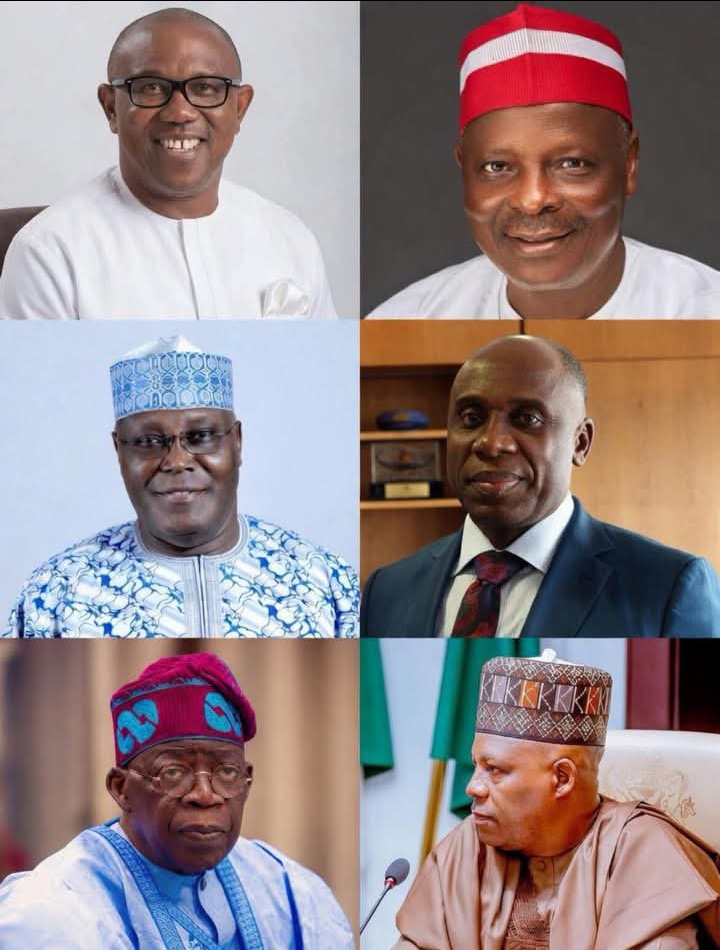
As conversations around Nigeria’s 2027 presidential election quietly begin to gather momentum, political observers and citizens alike are already sketching out possible alliances, permutations, and power blocs that could shape the next major contest.
At the center of these discussions are familiar heavyweight names—Peter Obi, Rabiu Kwankwaso, Atiku Abubakar, Rotimi Amaechi, Seyi Makinde, and the incumbent leadership of Bola Tinubu with Kashim Shettima.
A viral political prompt now making the rounds frames the potential 2027 race in simple but intriguing combinations:
“Your president from these acronyms in 2027: OK or KO, AA or AM, TS.”
Behind those abbreviations lie three major possible tickets:

OK / KO: A merger between Peter Obi and Rabiu Kwankwaso—two opposition figures whose combined grassroots appeal could reshape the electoral map if unity is achieved.
AA / AM: A ticket led by Atiku Abubakar, potentially paired with either Rotimi Amaechi or Seyi Makinde, blending experience with regional balancing.
TS: A continuation of the current administration under Bola Tinubu and Kashim Shettima, representing incumbency, structure, and established political machinery.
The Reality Behind the Permutations
While these combinations spark excitement online, the real political terrain is far more complex.
For instance, an Obi–Kwankwaso alliance has long been discussed but remains uncertain, largely due to differences in political structure, regional influence, and negotiation power. Both figures command loyal followings, but merging those bases into a single, disciplined force is easier imagined than executed.
Similarly, Atiku Abubakar’s potential alliances raise questions about generational shift and voter appetite. While his experience is undeniable, there is increasing pressure within the opposition to present fresher faces or more unconventional coalitions.
On the other hand, the Tinubu–Shettima ticket carries the weight and advantage of incumbency. Control of political structures, governance visibility, and party machinery often provide a strong edge in Nigerian elections. However, that advantage is always tested by public perception, economic realities, and voter satisfaction.
What This Means for 2027
What this viral question really highlights is a deeper truth:
Nigeria’s next election may not just be about candidates, it will be about coalitions, unity, and strategic compromise.
Opposition success will likely depend on whether key figures can set aside personal ambitions to form a single, formidable front. Without that unity, history suggests that divided opposition votes could once again favor the ruling party.
For voters, the conversation is already shifting from who is popular to who can realistically win and govern effectively.
The Big Question
So the debate continues:
If these were the final options—OK/KO, AA/AM, or TS—who would you vote for in 2027?
Because beyond the acronyms lies a much bigger decision about Nigeria’s direction, leadership style, and the kind of future citizens are willing to back up.


No Comment