


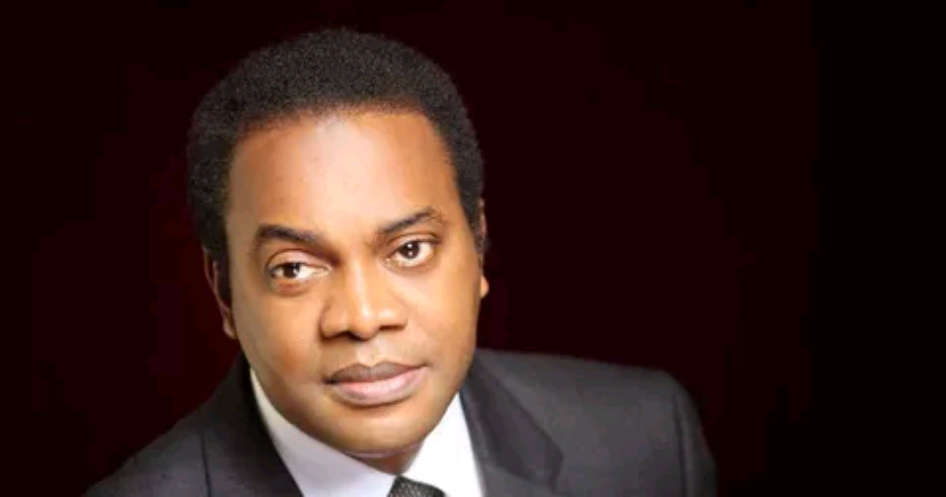
Former Cross River State Governor and Peoples Redemption Party (PRP) presidential candidate, Donald Duke, has said Works Minister David Umahi’s admission that a section of the Lagos-Calabar Coastal Highway would be diverted to the East-West Road has reinforced his concerns about the feasibility, cost and planning of the project.
Duke, who has repeatedly questioned the viability of the coastal highway, argued that the project should instead be called the Lagos Coastal Highway, insisting that the difficult terrain along the proposed route, particularly in the Niger Delta, could make its extension to Calabar prohibitively expensive.
Speaking during an interview on Arise Television’s The Morning Show on Thursday, the former governor also dismissed criticism from Bayelsa State Governor Douye Diri, describing him as a “local champion” for defending the feasibility of the project based on his administration’s experience in building roads through the state’s swampy terrain.
Duke maintained that the debate should not be limited to what individual states could achieve but should consider Nigeria’s overall financial position and competing development needs.
“There is no Lagos-Calabar Coastal Highway. What we have is a Lagos Coastal Highway that will never get to Calabar. Minister Umahi’s comment on the terrain has vindicated me,” he said.
“Roads can be built in places like Bayelsa, but the terrain makes it prohibitively expensive. This project, from Victoria Island to Epe, is simply a land grab.”

The former governor argued that the government’s financial constraints made it difficult to justify committing substantial resources to a project whose proposed route, in his assessment, would face significant geographical and engineering challenges.
He also questioned the economic priorities behind the project, saying Nigeria continued to grapple with widespread poverty and a large population of out-of-school children despite claims about the country’s economic standing.
“We have the largest number of poor people in the world. We have the largest number of out-of-school kids in the world, then you turn around and say you are the largest economy in Africa. It is not true,” Duke said.
He further alleged that the project was intended primarily to provide a coastal connection between Victoria Island and Epe, rather than deliver the full Lagos-to-Calabar route suggested by its name.
“The Lagos-Calabar Highway should be called Lagos Coastal Highway. It will not get to Calabar. The Minister has vindicated me by talking about the terrain. The project is so shady. We can’t afford it,” he said.
“I think the idea behind the road was to give a coastal road from Victoria Island to Epe. To me, it’s a land grab because they’re sandfilling.”
Duke clashes with Diri over Bayelsa terrain
Duke’s latest comments followed criticism from Diri, who had expressed disappointment over the former governor’s earlier assertion that constructing the coastal highway through Bayelsa would be impracticable because of the state’s swampy terrain.
The Bayelsa governor, through his Chief Press Secretary, Daniel Alabrah, argued that Duke was not sufficiently familiar with recent developments in road construction and infrastructure delivery in the state.
Diri maintained that his administration had demonstrated that roads and bridges could be constructed across difficult terrain, including swamps and mangrove areas.
“Clearly, he is not abreast of current developments in road construction and infrastructure development in our state,” the governor said.
Responding to the criticism, Duke said Diri was approaching the issue from a state-level perspective rather than considering the financial implications of the project for the country as a whole.
“And the governor of Bayelsa, if he did say so, I don’t know the fellow, but if he did say so, I think he’s just being a local champion,” Duke said.
He stressed that his South-South background did not prevent him from assessing the project from a broader national perspective.
“I’m from the South-South. I’m a Nigerian. South-South just happens to be where I originated from. But I’m looking at the totality of Nigeria,” he added.
Duke’s argument was that the ability to construct roads through challenging terrain did not necessarily establish that a particular project was financially justified, especially when the government was confronted with several competing demands for limited public resources.
Questions government’s financial capacity
The PRP presidential candidate also questioned the government’s ability to finance the coastal highway, arguing that Nigeria was already relying on borrowing to fund infrastructure development.
According to him, the financial burden of extending the road even to Epe raised questions about the affordability of the wider project.
“It’s just not feasible. We don’t have the kind of money to do it. We’re literally borrowing to even stretch Epe stretch. We’re borrowing. We can’t do it,” he said.
He argued that the government needed to demonstrate that the expected benefits of the highway justified its cost, particularly in a country facing significant social and economic challenges.
Duke also raised questions about the project’s planning following reports that a section of the route would be diverted to the existing East-West Road.
“Now, they have said that they’re going to divert the road onto the East-West Highway. Weren’t they aware of the East-West Highway from get-go?” he asked.
His comments suggested that the proposed diversion raised concerns about whether the existing road network and the engineering challenges along the route had been adequately considered during the project’s initial planning.
The former governor did not provide a detailed cost assessment of the proposed route in the interview, but maintained that the combination of difficult terrain, financing constraints and the reported diversion supported his objections to the project.
The Lagos-Calabar Coastal Highway is a major federal infrastructure project intended to connect Lagos with coastal communities and states towards Calabar, Cross River State. Its proposed alignment through parts of the Niger Delta has drawn attention to the engineering and financial challenges associated with constructing roads in swampy and mangrove environments.
Duke’s latest intervention has renewed the debate over the project’s feasibility, affordability and execution, with the disagreement between him and Diri highlighting differing views on whether the technical challenges can be overcome at a justifiable cost to the country.


No Comment